Three Garments, One Way of Thinking: Designing with FPDC
Three Garments, One Way of Thinking: Designing with FPDC
There are stitches that I return to almost instinctively. Not because they’re trendy or effective at first glance, but because they give me space to build form, texture and the rythm of the fabric.
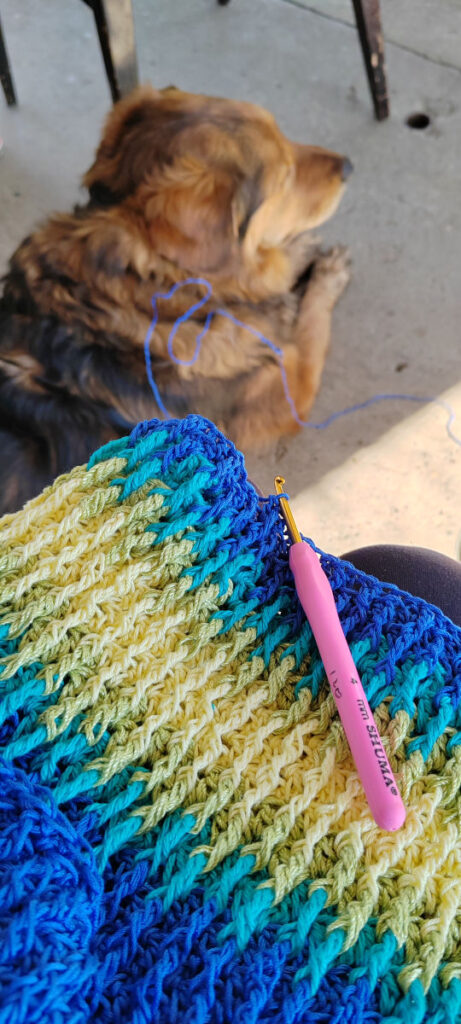
One of those stitches is fpdc (front post double crochet).
Today I don’t want to write a tutorial. I’m not explaining how to do the stitch, nor offer you ready-made instructions. This is a little insightbehind the scenes – how one stitch can become a part of your thoughts and not only a technique.
Why FPDC keeps pulling me back
FPDC is one of those stitches that quietly does a lot of work.
It creates:
texture without heaviness
structure without stiffness
rhythm without repetition
When worked over larger areas, fpdc forms a ribbed surface that feels almost architectural — especially on the upper parts of garments. I often use it where I want the fabric to hold the body gently rather than drape away from it.
That’s exactly what happened with these three pieces.
1. The pale pink dress — where it all started
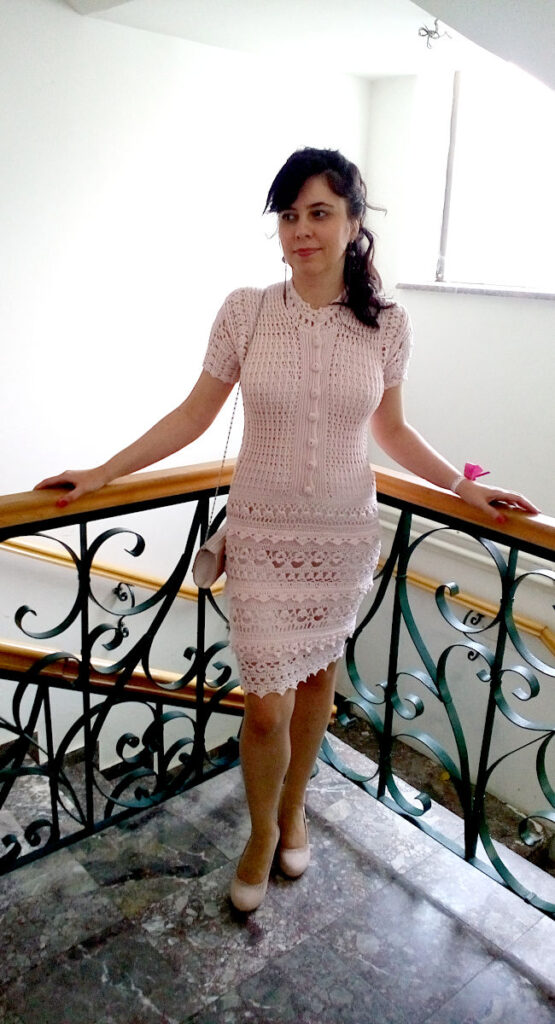
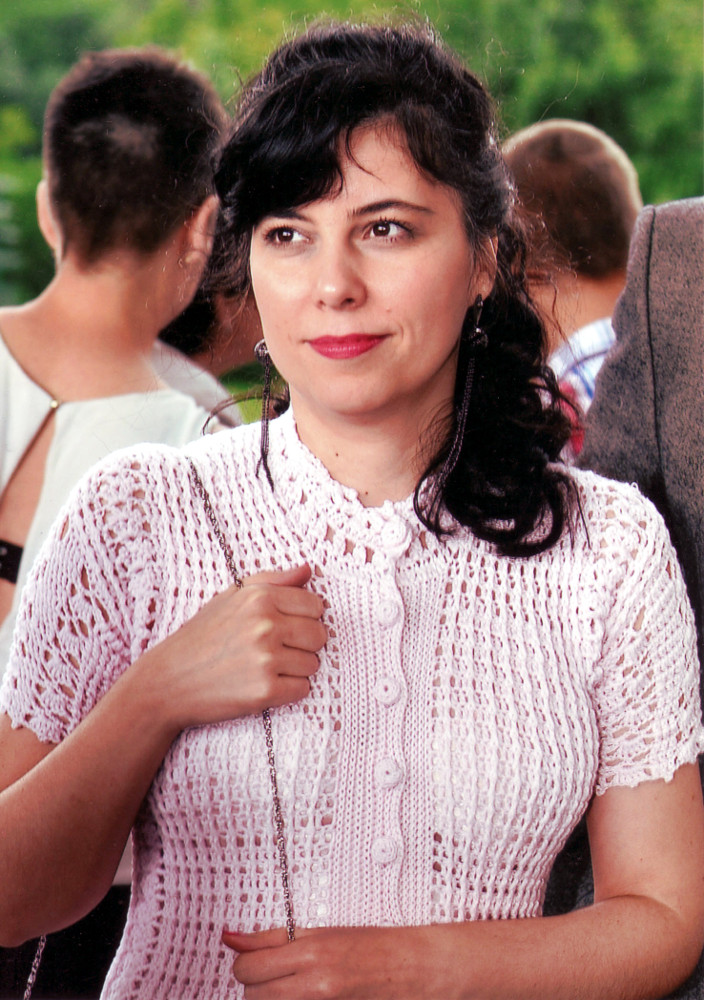
The first garment I made using fpdc (alongside several other stitches) was a pale pink dress with short sleeves and a buttoned front.
It fastens with eight buttons, which immediately gives it a tailored, almost vintage feel — something between handmade softness and quiet elegance.
The inspiration came from two places:
a dress I had seen online
the works of Vanesa Montoro, whose designs deeply influenced my early relationship with crochet garments
But once I started crocheting, the piece quickly became my own.
I wore this dress to a wedding, and the number of compliments I received confirmed something I already felt while making it: this was a garment with presence.
FPDC played a key role in shaping the upper front panels, giving them a subtle ribbed texture that added both structure and refinement — without overpowering the delicacy of the pink yarn.
This was the moment I realized that fpdc could be more than a decorative stitch. It could be a design tool.
2. The blouse — same idea, distilled
The second piece came naturally.
I took the exact same stitch pattern and construction logic from the dress — and simply removed the skirt.
The result was a blouse, lighter in feel but equally expressive in texture.
This piece taught me something important: when a stitch pattern is strong and well-balanced, it doesn’t depend on scale.
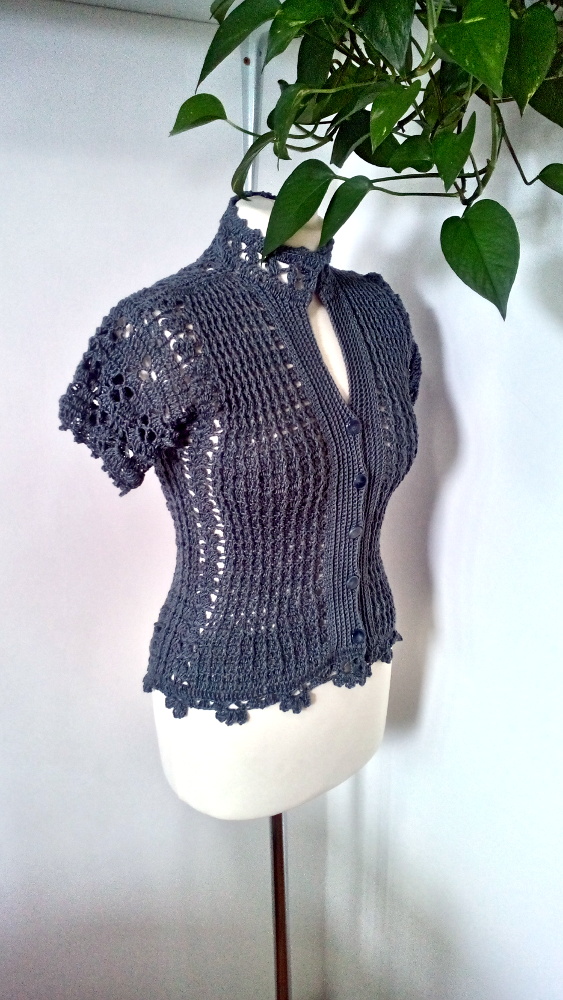
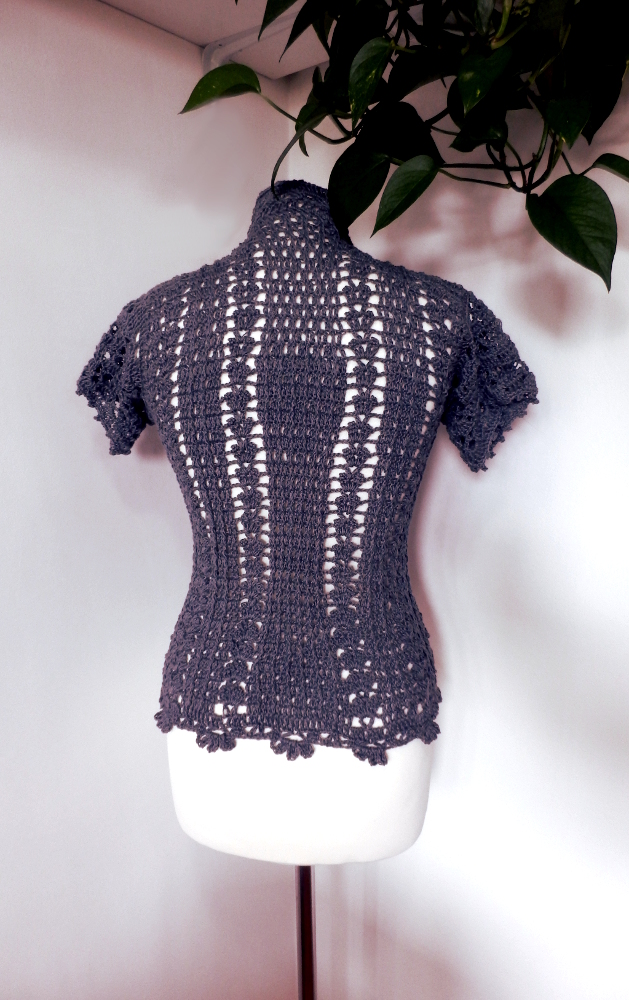
The fpdc texture on the upper front panel worked just as beautifully on a shorter garment, proving that good design ideas can travel — from dress to blouse, from statement piece to everyday wear — without losing their character.
3. The winter dress — color, texture, and confidence
The third garment is perhaps the boldest.
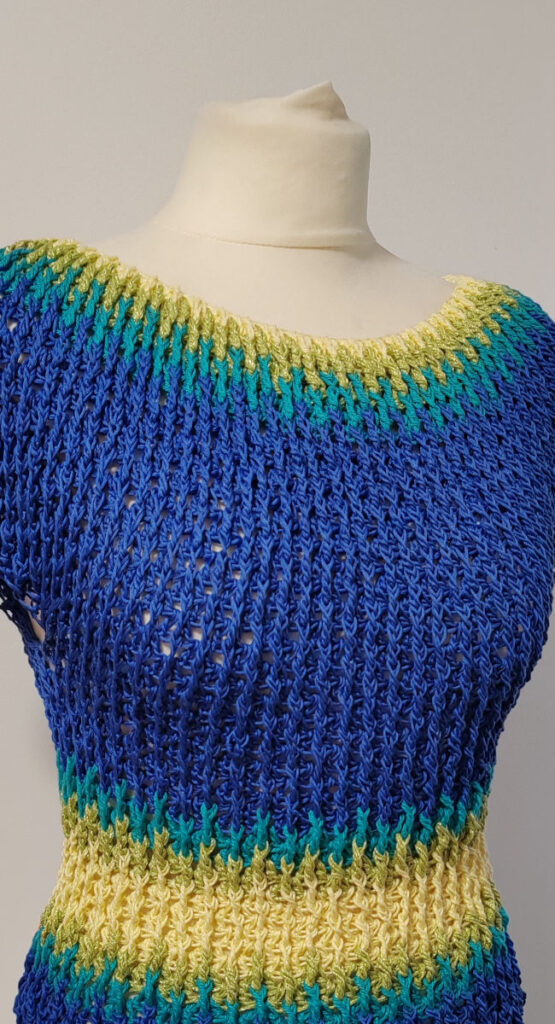
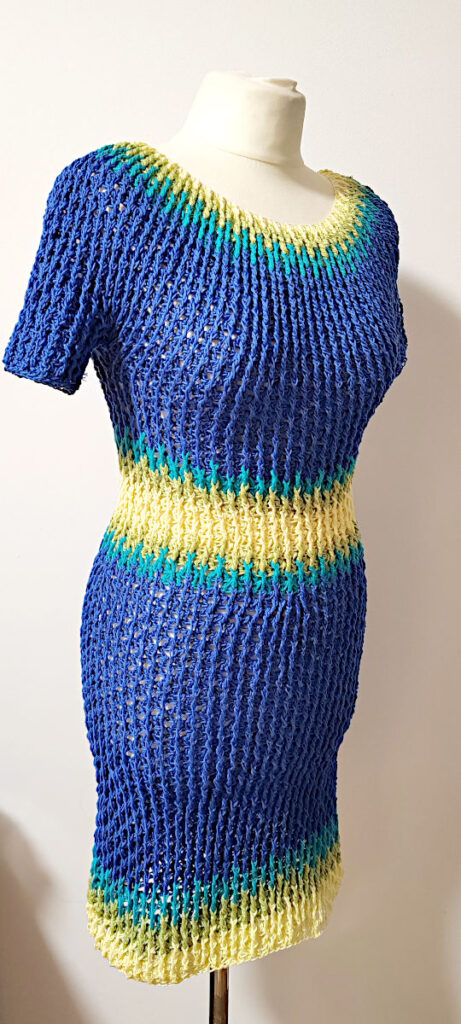
A winter/fall dress worked in bright blue, with transitions into yellow, lime green, and deep green, all carefully chosen from the same color palette.
Most of the dress remains blue, allowing the color transitions around the yoke, waist, and hem to stand out without overwhelming the eye.
Here again, fpdc creates a ribbed texture on the upper front panels — grounding the design and giving the dress a sense of strength and warmth that suits colder seasons perfectly.
This piece feels confident. It doesn’t ask for attention — it holds it.
What these three garments have in common
None of these pieces have written instructions. None were planned stitch by stitch.
I worked with:
brief notes
small diagrams
a clear vision of how I wanted the fabric to behave
These garments were designed by thinking in texture, not rows.
And that’s something I believe many experienced crocheters already do — sometimes without realizing it.
For makers who like to think independently
This way of working isn’t for everyone — and it doesn’t need to be.
But if you’re someone who:
enjoys modifying patterns
likes understanding why a stitch works where it does
feels comfortable letting the hook lead
then fpdc is a stitch worth revisiting — not as a technique to master, but as a language to speak.
Sometimes, seeing a stitch in motion is all you need to start imagining where it could take you next.
A little reminder
Not every garment needs to become a pattern. Some pieces exist simply to teach us something — about stitches, about structure, or about our own way of making.
These three certainly did that for me.
Want more crochet inspiration? Follow me on Pinterest for more crochet patterns!
Stay up-to-date with my latest crochet projects! Follow me on Instagram!